Intelligence—military or civilian—is an important matter. It should not be used as a toy. It should not be manipulated—for whatever reason—by the people in the military and civilian government organs that control the collection, analysis, processing and dissemination of intelligence.
Intelligence is too vital a part of a state’s means of insuring its own security and survival to be trifled with.
But that is what happened more than 10 years ago, in connection with the effort to have former President Joseph “Erap” Estrada impeached.
The Intelligence Service of the Armed Forces of the Philippines (ISAFP) was used for partisan politics—and made to fabricate and disseminate intelligence information.
Military intelligence people used what they allegedly saw while spying on then President Estrada. They provided witnesses to help persuade the public—including lawmakers—to decide that Mr. Estrada deserved to be impeached and removed from office.
Later, when Mr. Estrada had been ousted by the revolt of the Makati rich and the politicians lusting to replace him and his coterie in Malacañang, the ISAFP gave prosecutors bent on persecuting Mr.
Estrada alleged A-1 intelligence information. The false intelligence said that hehad, with then PNP Police Director (now senator) Panfilo Lacson, “laundered nearly $1 billion believed to have been amassed since 1996 from drug trafficking, kidnapping and other criminal activities into bank accounts in three countries.”
The revelations were made by the chief of ISAFP, then colonel and now retired Brig. Gen. Victor Corpus. The Inquirer published an article that quoted Corpus as saying “that at least $728,500,293 was stashed in individual and joint accounts in 18 savings, checking and time deposits in Citibank and Bank of America branches in the United States, Hong Kong and Canada.” The article also said Corpus told the Inquirer that a joint team of the Isafp and Philippine National Police left Manila on June 2, 2001, and spent nearly a month in San Francisco investigating the alleged bank accounts.”
Those reports turned out to be rubbish. But it was made a basis for sending Erap Estrada to jail.
Corpus apologizes, Erap accepts
The other day, President Estrada, according to an Inquirer report, “accepted the apology of retired Brig. Gen. Victor Corpus, former head of the Intelligence Service of the Armed Forces of the Philippines (ISAFP), in connection with the publication in the August 5, 2001, issue of the Inquirer of a news report headlined “Ping has millions in the US.”
Mr. Corpus had apparently written to former President Estrada and Mrs. Estrada (the former Sen. Loi Estrada) asking the couple accept Corpus’ apology “for troubling (them) and (their) family in the past.”
The report said: “The Inquirer also wishes to express its regret for the publication of the news report, which was based on an interview with then Colonel Corpus and on the post-operation report he submitted to then President Gloria Macapagal-Arroyo.
No criminal liabilities?
When intelligence operatives damage a person, using false information, should they not be held liable and punished?
This impunity is, sadly, another unjust characteristic of the Philippine system. Military men can tell lies, abuse and maltreat innocent persons—arrest them, disappear them and kill them extrajudicially—and go on with their lives happily without fear of being made to pay for their evil deeds.
Mr. Corpus and the Isapf furthered the interests of politicians in power. They worked against the laws of our Republic to serve the ruling power.
But some other persons with plans different from those of the rulers can also use the power of the military intelligence agencies. That happened with the “Hello Garci” tapes. Those tapes were recordings of phone calls between a woman whose voice and intonation pattern are that of then President Gloria M. Arroyo and the Commission on Election’s Virgilio Garcillano. It is against the law for a candidate to converse with an election commissioner.
The Hello Garci tapes began the destruction of then President Arroyo’s reputation. Those tapes led to her unprecedented unpopularity, her being the most widely vilified figure. Her unpopularity took away the luster of her immense achievements as our president. Because of the “Hello Garci” tapes, until today, when the Aquino administration must follow the good socio-economic blueprints crafted during the Arroyo years, the Philippine public cannot believe what the World Bank, the IMF and other international bodies recognize as then President Arroyo’s exceptional successes in the management of the Philippine economy.
NICA rice-crisis report
How important intelligence reports are was again illustrated by another Inquirer gaffe. Earlier in the month, it made a shocking page 1 banner story of a fictitious report that there was a looming rice crisis. The Inquirer was conned into believing that the report was an authentic intelligence product of the National Intelligence Coordinating Agency (NICA), one of the State’s key civilian intelligence services, an agency under the Office of the President.
The NICA head, the Secretary of Agriculture and the President’s spokesmen denied the existence of such a report.
A most important reform
The government has more than a dozen intelligence bodies. In fact, every government department, bureau, and unit has “intelligence funds,” which are not subject to public auditing by the COA.
Among the most serious reforms that must be done to make ours a more just and human-rights respectful government is in the manning of the intelligence agencies.
Apart from being people of exceptional intellectual powers and intelligence, the men and women—and the leadership—of ISAFP, NICA and the other “spook” offices must be persons of the highest moral character.
Unfortunately, such persons are the most difficult to find in our unhappy land.
Editorial, The Manila Times

China's tough line on territorial disputes worries the region
That China is one of the most powerful states in the world is no longer a contested claim, but cataloging China's increasing material resources does not in itself demonstrate that China is powerful.

A more telling question is how effectively does China convert its growing resources into influence over other states' strategic choices and the outcomes of events?
Southeast Asia presents an apparently "easy" case for investigating China's rising power. Given the significant asymmetry of power, if China's power has indeed grown, we would expect to see altered preferences and behavior of these weaker neighbors in response to coercion, persuasion or inducement from China.
Results so far are mixed. While China has been able to harness much of the region's economic energy in a favorable direction, it does get its way in territorial and resource conflicts.
China's burgeoning economic rise has restructured economic networks in East Asia, fueling regional production for China as the final assembly and export point to the rest of the world. The Chinese government has also tried to consolidate its economic leadership position by driving broader economic regionalism.
In less-developed mainland Southeast Asia, China's participation has made feasible region-wide economic development plans for the Greater Mekong Subregion initiative of the Asian Development Bank, drawing international investment for infrastructural projects.
These connect the poorer states – Cambodia, Laos and Vietnam – to the markets of China and Thailand, while improving China's access to raw material supplies and ports in the Indian Ocean and East China Sea. These schemes have also spurred Japanese and American interest and investment in Mekong regionalism.
More prominently, China's initiative for a free trade agreement with ASEAN overcame the nagging problem of galvanizing an economic integration project. When it came into effect in 2010, the China-ASEAN Free Trade Agreement formed the world's largest free trade area, comprising 1.9 billion consumers and US$4.3 trillion in trade.
Southeast Asian states were unable to achieve effective regional economic integration because of the Cold War and competitive economic profiles in low-cost manufacturing. China has lent weight and momentum to translating their shared developmental imperative into regional economic integration. It exercises power via a multiplier effect: The size of its manufacturing sector produces economies of scale, and its political clout lends significance, even legitimacy, to the enterprise.
While such a multiplier role is crucial to China's political successes in Southeast Asia, it paradoxically does not provide the best evidence for China's influence, because Beijing is mobilizing pre-existing shared preferences and does not have to get others to do what they did not want to do.
In contrast, situations in which the pre-existing preferences of other states are unclear or undecided – such as the prominent debate in the 1990s about whether rising China was a threat – present opportunities for China to influence its neighbors by persuading them that its own narrative of the so-called peaceful rise is more accurate and certainly more profitable. Against the gathering discourse about a China threat, an official Chinese campaign took off from the mid-1990s to shape world perceptions of China instead as a benign, responsible great power.
This campaign involved an alternative narrative about China's cooperative New Security Concept, and its "peaceful rise" or "peaceful development" as it strives for a "harmonious world." The message was intended to reassure neighbors that China's resurgence would not threaten their economic or security interests because of its peaceful intentions, limited national capabilities, mutually beneficial development trajectory and pluralist international mindset.
Rhetoric was accompanied by policy action. In Southeast Asia, China negotiated land, though not maritime, border disputes with Vietnam; fully participated in ASEAN institutions; and undertook highly publicized restraint and aid during the 1997 and 2009 financial crises. China's persuasive power encompassed economic inducement. Its CAFTA Early Harvest Programmes with some ASEAN countries – the partial lifting of trade barriers on selected goods – have been portrayed by Chinese analysts as China "giving more and taking less," working towards harmony and enrichment of its neighbors.
Yet, there are limits to how much policymakers in Southeast Asian states have been reassured regarding the China threat. China's power to persuade is rooted in its ability to sustain benign policy action. Apart from efforts to offset some of the adverse effects of Chinese economic competition, China's neighbors are also watching its behavior in more serious conflicts of interest.
The best way to gauge the conversion of power into influence is in cases where the powerful actor causes another actor to change policy on a significant issue on which they have clashed. In the case of China and Southeast Asia, such issues include policies on Taiwan, defense relations with the US and policies on territorial disputes. On these potential hard cases, it's difficult to find significant changes in Southeast Asian states' policies in response to Chinese actions to date.
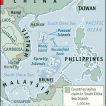
Of these, China has expended most effort in the disputes over atolls in the South China Sea. China and ASEAN agreed a Declaration of Conduct in 2002, committing to peaceful negotiations. Yet, the Chinese navy continued maneuvers to assert its claims, leading to skirmishes with Vietnam and the Philippines. Two months into a Vietnamese concession to develop gas fields off the Vietnamese coast in 2007, BP suspended operations, reportedly as a result of Chinese threats to exclude it from future energy deals in China. In March this year, Chinese naval vessels tried to interrupt oil exploration by the Philippines in waters that Manila considers its own.
At a regional defense ministers' meeting in June 2010, statements suggesting that China now regards the South China Sea as part of its "core national sovereignty interests" led US Secretary of Defense Robert Gates to warn that the US "oppose[s] the use of force and action that hinder freedom of navigation." One month later, Secretary of State Hillary Clinton reiterated US "national interest" in the peaceful resolution of these multilateral disputes. In October 2010, after the Japanese Coast Guard detained a Chinese fishing trawler for allegedly intruding into Japanese waters, a Sino-Japanese standoff ensued. One direct result was the further strengthening of US interest in China's behavior in maritime disputes. The Obama administration publicly affirmed that the US-Japan treaty umbrella extends to the Senkaku/Diaoyu Islands and reiterated the importance of peaceful dispute resolution, freedom of navigation and respect for international maritime laws in the South China Sea.
China's behavior in these disputes constitutes a critical test of its intentions, and its hard line backfired seriously in that it led to a closing of ranks across Southeast Asia, Japan and the US. Beijing's actions lend weight to regional pessimists who are not persuaded of its peaceful rise, and sustained coercive action may prompt its neighbors towards the very containment policies that it wishes to avoid.
Having said this, it is worth noting that, so far, there are few good cases of China managing to make Southeast Asian states to do what they otherwise did not want to do. Alongside Beijing's successful record of persuasion and inducement, it has shown caution in exerting pressure on its neighbors with the most challenging issues. The recent backlash in the South China Sea is likely to make Beijing more cautious. China's still limited military capacity provides an important explanation, since, particularly in the maritime access and security arena, the presence of the United States still serves as a significant deterrent.
By Dr. Evelyn Goh reader in international relations and ESRC mid-career development fellow (2011-13) at Royal Holloway, University of London. This is reprinted with permission from YaleGlobal, the magazine of the the Yale Center for the Study of Globalization, Asia Sentinel

Jaitapur says NO to nukes
The fallout from Fukushima
Protests, political volatility and bloody clashes between the local populace, activists and police in India's Maharashtra state have once again revived the contentious debate about nuclear power safety versus cheap energy production in an emerging economy.
It also raises the question how a country like India, which needs nuclear energy to power its exponential growth, marry its seemingly contradictory requirement for cheap energy production with nuclear safety.
Jaitapur, a small city on the Arabian seacoast, is the projected site for the world's largest nuclear power project, a 9,900-MW, US$10-billion plant in the eco-sensitive geological Western Ghats Belt. Last December, the French multinational Areva Group was awarded the contract by the Nuclear Power Corporation of India Ltd to construct six European Pressurized Reactors, each of 1650 MW capacity, or four times the size of Fukushima. The project is expected to overtake the world's current largest, the 8,200 Kashiwazaki-Kariwa Nuclear Power Plant in Japan.
Work on Areva's reactors, to be operational in 2018, is to begin shortly. However, the project has fuelled concern among Jaitapur's local populace – mostly farmers growing paddy, mango and cashew – about a Fukushima-like catastrophe. Opponents have noted that the area is seismically very active and a record 95 earthquakes rocked it between 1985 and 2005. The seismic activity was minor, government officials counter, adding that the plant's location on a high cliff further cushions it against tsunamis.
Jaitapur's residents have opposed the nuclear project for the past three years. That opposition gathered momentum last week and exploded in the face of the Congress-led state government when a protesting fisherman was shot dead by the police.
The villagers' main concern is that the state government never really took them into confidence about the project and thus failed to win them over. This led to a groundswell of anger that the anti-nuclear lobby and Shiv Sena, a Hindu fundamentalist group, are capitalizing on, for political gain.
Prime Minister Manmohan Singh, a staunch advocate of nuclear power, nearly staked the survival of his government, the United Progressive Alliance-led coalition, in 2008 on a civil nuclear deal with the United States. That agreement, finally sealed last year, has enabled India to purchase nuclear technology from Western nations that previously would not sell to it because Delhi was not a signatory to the Nuclear Nonproliferation Treaty.
However, following the treaty, opposition parties led by the right-wing Hindu Bharatiya Janata Party, forced the UPA government to buck international practice and make nuclear plant suppliers liable for accident compensation claims as well. This, they deemed necessary, to prevent a repeat of the Bhopal gas tragedy of 1984 in India's central state of Madhya Pradesh, which ranks as of one of the world's worst industrial disasters. Critics say that despite the magnitude of the disaster, the Indian government at the time, led by late PM Rajiv Gandhi, let Union Carbide off the hook quite easily despite the latter's paltry monetary compensation to the gas victims. The lenience of the action against the Union Carbide officials led to an uproar in India.
Since the formalization of the India-US treaty, western companies – including Areva, the US's General Electric and state-owned Russian enterprises – have been vying for India's nuclear industry bandwagon, eager to snag contracts worth billions of dollars.
This competition among western companies, analysts say, is likely to intensify further as by 2030 India gets set to generate 40,000 MW of nuclear energy with modern nuclear technology to sustain its 9-10 percent growth.
Union Environment Minister Jairam Ramesh has ruled out a reassessment of the planned Jaitapur facility although he said over the weekend that concerns raised by villagers' were "rationally justified" and the government must go-slow with the project.
The minister said that his ministry would, if required, reimpose certain conditions and safeguards on the Jaitapur project following a report by a ministry-appointed committee to look into safety issues at all coastal plants.
Even so, the phobia among the Jaitapur residents continues. They fear that the reactor will wreck their traditional livelihoods of fishing and farming. Already, many of the over 2,000 Jaitapur landowners have rejected payment for the land the government forcibly acquired for the plant as a form of protest.
Local farmers are worried that radioactive contamination might have an adverse impact on their produce, mainly the region's acclaimed Alphonso mangoes, which fetch about US$20 for a dozen in Mumbai's markets. Fishermen worry that the millions of gallons of hot water that will whoosh out of the proposed plant into the sea will render the coast uninhabitable for edible fish, ruining an industry that supports thousands of families.
Currently, India gets about 3 percent of its electricity from the 20 relatively small nuclear reactors in the country. But five big new reactors and 39 more modest ones are in the pipeline to help meet the country's gargantuan appetite for power as a fast-growing economy of a billion-plus people.
By 2050, the Indian government hopes to significantly augment the nuclear component in the country's energy profile. It says a quarter of the nation's electricity should come from nuclear reactors over the next four decades. And the Jaitapur project would be a giant step towards that ambitious goal.
According to Robinder Sachdev*, India's nominee for a Global Task Force set up by the World Energy Council (WEC) to assess the impact of Fukushima crisis on nuclear energy sector, one common worry emerging amongst most countries, including India, is the role played – and autonomy enjoyed – by each country's atomic regulatory bodies.
For India, Sachdev proposes that the Atomic Energy Regulatory Board (AERB) be given greater autonomy and its capacity built upon to strengthen and infuse transparency in the country's nuclear dealings. "Also," he adds, "the AERB must stay at an arm's length from the power producer and policy planners at the Department of Atomic Energy."
A sharp focus on liability issues, according to the expert, would also help – since the operator and vendors would then have to clearly demarcate their responsibilities, and could then even act as a counter-check on each other.
Apart from this, what also needs to be addressed, say experts, is the human resource shortfall within the AERB. "The Board's current human resources capacity is woefully inadequate," Singh says. "India must invest in higher education, training schools and the certification for professionals in this industry to produce trained engineers and other experts to man the power plants."
As further plants are set up in India, especially with reactors from foreign vendors, this professionalism will force greater transparency upon dealings as the terms and conditions of the contracts will be negotiated in a more open manner, opine experts.
To prevent a repeat of more Jaitapur scenarios, Ramesh also advocates effective public outreach programs which demystify nuclear energy. "Right now," says an industry source, "an average Indian associates the word `reactor' with a nuclear bomb! So the government needs to work upon this and win over their confidence."
"However, Fukushima doesn't spell the funeral of atomic energy in India," the source says. "It has just put the spotlight on the industry's unsolved problems." By Neeta Lal New Delhi-based senior journalist for Asia Sentinel


HAMBALI, considered responsible for the 2002 Bali bombings, will never face trial for the worst terrorist attack against Australians, despite a WikiLeaks document showing US investigators believe the Indonesian was intimately involved in the plot.
The newly released document, which was compiled by Hambali's US captors at Guantanamo Bay, suggests the decision to attack Paddy's Bar and the Sari Club in the Kuta district may have come about because an earlier target, a Caltex oil refinery in the Malacca Straits, was judged too difficult.
But despite the view of investigators that Hambali (Riduan Ismudin) was heavily involved in the attacks, as well as a spate of other bombings across Southeast Asia, a senior US official yesterday told The Australian that Hambali was unlikely ever to be charged with the bombing.
"All those plots we are working on, and I think we have evidence," the official said.
"Where we are still lacking, though, is the Bali bombing."
The official, who asked not to be named, said "evidentiary" problems were behind the decision not to lay charges over the Bali bombing that killed 202 people, including 88 Australians. "We have got to connect all the dots back to him, and we are still missing some pieces on that."
The document is one of hundreds of secret US government files compiled on the nearly 800 foreign prisoners held in Camp Delta at the US naval base at Guantanamo Bay in Cuba.
It provides intriguing new details about Hambali's journey from moderate Muslim in Malaysia to hardened extremist, with the terrorist claiming he was recruited and "brainwashed" by radical cleric Abdullah Sungkar, who along with Indonesian Abu Bakar Bashir founded the terrorist group Jemaah Islamiah.
The report was signed by US Rear Admiral D.M. Thomas Jr in October 2008, more than five years after Hambali's capture in Thailand in August 2003.
Bearing a recent picture of a slimmer and bearded Hambali, it concludes the terrorist mastermind continues to pose a high risk to US interests and allies, and declares him to be of "high intelligence value" because of his long association with senior al-Qa'ida figures such as Osama bin Laden and Khalid Shaikh Mohammed.
The report says the 47-year-old was heavily involved in al-Qa'ida's anthrax and chemical weapons program, and was in Karachi at the time of the September 11, 2001, attacks on the US trying to procure equipment for a chemical weapons assault.
The file says Hambali discussed with another senior al-Qa'ida figure the possibility of using helicopters to attack the US embassy in Jakarta as beefed-up security had made it "more difficult to get cars near the embassy".
Hambali was captured in a joint US-Thai operation in Thailand in August 2003.
In an intriguing new theory, US authorities suggest Bali may have been targeted after JI bombmaker Azahari bin Husin told fellow plotter Mohd Farik Bin Amin - who is also a prisoner at Guantanamo - that an attack on a Caltex oil facility was too complex.
"(Mohd Farik Bin Amin) reported back to (Hambali) that Dr Azahari stated the operation would be very difficult to conduct," the report says.
"(Hambali) speculated that Dr Azahari chose to conduct the Bali nightclub bombing versus the original operations against Caltex, ExxonMobil, and/or the gold mine."
Dr Azahari, killed by Indonesian authorities in 2005, is believed to have constructed the bombs used in the Bali attacks.
The 2002 Bali bombings on October 12, 2002, were carried out by members of JI, which was affiliated with al-Qa'ida via Hambali, who served as the link between the two groups.
Three of the plotters - Imam Samudra, Mukhlas and Amrozi - were executed for their role in the attacks by Indonesian authorities in 2008.
But US authorities have long maintained Hambali played a key role in the operation, with Mohammed even sending Hambali $US50,000 "because the Bali bombings had been a success".
"The money was to be used for the next operation and to help the families of the people arrested for the Bali operation," the report says.
Hambali is accused of funding the 2003 attack on the Marriott Hotel in Jakarta, which killed 12 people, as well as Christmas Eve church bombings across Indonesia that claimed 18 lives in 2000.
According to the US document, Hambali confessed to the church bombings while in US custody.
"He justified his actions because of the injustices being committed towards Muslims in Indonesia," Admiral Thomas writes.
The senior US official said that although the Bali case was weak, Hambali would still have to answer for other attacks when he was tried, either by a US military commission or civilian court.
"The strongest case is the Marriott bombing," the official said.
It is understood police from the Indonesian counter-terrorism unit Densus 88 were given extended access to Hambali at Guantanamo Bay in early 2009. He reportedly was co-operative, and grateful for the Sundanese food the officers brought him.
The Indonesian authorities are understood to share the view of US investigators that the case against Hambali for Bali 2002 is significantly weaker than for the Marriott Hotel 2003 and Christmas Eve 2000 bombings.
Two years ago, in an interview with the Jakarta Globe, convicted terror bombers Ali Imron and Mubarok said they were prepared to testify against Hambali if he was tried in Indonesia. By Paul Maley and Peter Alford for “The Australian”

THE open wound that is Tibetan resentment of Chinese rule refuses to heal. According to accounts seeping out of China, it has been bleeding profusely for some six weeks now at Kirti, a Tibetan monastery in Sichuan province. Kirti is in Aba prefecture, which Tibetans regard as Amdo, a part of historic Tibet.
Two Tibetans in their sixties are reported to have died after being beaten by security forces on April 21st. Their deaths came as the monastery was raided and more than 300 of its nearly 2,500 monks were detained for purposes of “legal education”.
The confrontation started with the death of a young monk, Rigzin Phuntsog, variously described as 16 and 20 years old, who set himself on fire on March 16th. His self-immolation was to mark the third anniversary of bloody anti-Chinese riots in the Tibetan capital, Lhasa. The 2008 riots were followed by a harsh crackdown on dissent across what China calls its “Tibet Autonomous Region” as well as in ethnic-Tibetan areas of adjoining provinces, including Sichuan and Qinghai.
Tibet’s exiled spiritual leader, the Dalai Lama, has accused the police of not even trying to put out the flames that engulfed the young monk. He says they beat Phuntsog instead, hastening his death. A county-government spokesman however said the police doused the flames and blamed the young man's death on “treatment delays”. The government has since called his suicide a “carefully planned and implemented criminal case, which was aimed at triggering disturbances”.
The Dalai Lama said the monastery has been surrounded by Chinese troops, who at one point prevented food and basic supplies from entering. Clandestine video has captured the huge funeral held for the dead monk. Local Tibetans, many of them elderly—like the two who were killed—staged a vigil outside the monastery to protect the monks from reprisals for their protests.
The Chinese government has responded to the tension by closing the area to foreigners, never mind that on April 19th they declared that the situation there was “normal”. Since then, the official Chinese press has alleged immorality among the monks at Kirti—which it portrays as a hotbed of gambling, pornography and other misconduct.
What exactly is going on at the monastery remains subject to conflicting claims. That many Tibetans remain deeply unhappy at living under Chinese rule seems hard to deny. By Banyan, The Economist

But the reasons may have less to do with to do with production than economics
The Asian Development Bank, in a report issued Tuesday, is warning that global food prices, which have skyrocketed by an average of 30 percent year on year, gross domestic product growth for some food-importing countries "could be choked off by up to 0.6 percent."
Combined with a 30 percent annual increase in world oil prices, GDP growth could be reduced by as much as 12.6 percent, tipping nearly 65 million additional people into poverty in developing Asia, according to the report, titled Global Food Price Inflation and Developing Asia.
The question is why this is happening. There have obviously been localized weather problems in some areas, including drought in China’s wheat-growing areas – which was broken before it did real damage to crops – as well as floods in Pakistan and other regions.
But two of the world’s biggest countries have come through largely unscathed. China announced on March 10 that it expects a record grain harvest despite the drought, making it the country’s eighth successive annual record harvest, at 546 million metric tons of grains. In addition, India announced on April 6 that it would harvest an estimated 235 million tons of foodgrains in the crop year ending in June, an all-time record, which is expected to turn India into a grains exporter.
In addition global rice production, which feeds a huge population in Asia, has been outpacing demand since the 2004/05 crop year, the seventh straight year of surplus production. Demand growth for rice has averaged only 1.1 percent over the past 10 years. Soyabean production is expected to rise by 4.1 percent year on year, reaching 269 million tons while consumption, even though rising slightly faster, will reach 268 million tons, just below production.
The ADB report blames production shortfalls due to bad weather as well as structural and cyclical factors at play during the 2007-2008 food crisis. In particular, the report says, the world is coming off one of the worst El Nino-La Nina in recent decades. As well, the report says, "supply-side factors include competing use of food grains, especially corn and rapeseed oil, to produce biofuel; urbanization and diversion of agricultural land for commercial purposes; increasing scarcity of fresh water for irrigation; low crop yields, rising input costs, and neglect of investment in agricultural technology, infrastructure, processing facilities, and agriculture research and development."
In fact, however, there appears to be plenty of land available for planting. Brazil, the Congo, Sudan, Angola, Columbia, Argentina and Bolivia, according to the FAO, have surplus land for planting. Brazil could bring 163.65 million hectares into production without touching the Amazon rainforest, and still leaving 150 million hectares for pasture land. Argentina has 38.2 million hectares of extra land available for planting. Angola has large resources of fresh water and substantial unused land. Russia and the Ukraine still have 41.3 million hectares and 6.3 million hectares respectively that were taken out of production 20 years ago with the collapse of the Soviet Union. Central Africa, Kazakhstan and Australia all have surplus land for planting.
Actually, it appears, the escalation in food prices instead has to do with economic factors more than anything else. Dr Jim Walker, the head of the Hong Kong-based market research firm Asianomics, puts the blame at the door of US Federal Reserve Chairman Ben Bernanke and other central bank heads across the world for flooding the world with loose money and particularly on Bernanke for QE2, the quantitative easing that got underway in mid-2010. In his April 13 report, Dr Walker reproduces the following chart from Bloomberg:
"There is no doubt in our minds that Fed, and other global central bank policies, are at the heart of the surge in global commodity prices that are ruining the lives of millions of poor people," Walker writes, "even if much of the pass-through is the result of inept monetary policies run in emerging markets themselves. And this on top of the life-ruining zero interest rate policy that has denied countless American, European and Asian savers and pensioners of their hard-won interest income, means that Mr Bernanke really does have a lot to answer for."
The continuing devaluation of the US dollar against other currencies has also played a role, along with panicking governments and over-eager investors. Now, with the worse of the El Nino-La Nina cycle over for now, alarmist investors will probably start to settle down, according to . commodities specialists such as Hugh Peyman, the managing director of the Shanghai-based Research-Works market research firm.
That doesn’t mean life is going to get much better for the world’s poor right away. Whatever the factors that led to the spike in prices, they have been very real. Global rice prices increased by 16.8 percent between June of 2010 and February of 2011. International wheat prices rose by 99.6 percent in the eight months to February. Food price inflation has reached double digits in Bangladesh, China, Indonesia, India, South Korea, Pakistan, Sri Lanka and Vietnam, according to the ADB report.
Food inflation in January was running at 10.3 percent, 12.0 percent in South Korea and 11.1 percent in Vietnam, according to the report. Food price inflation in the past has played a major role in bringing down governments, and it could well again.
The Food and Agriculture Organization of the United Nations lists Afghanistan, the Kyrgyz Republic and Pakistan as among those countries that will experience severe localized food insecurity "in part due to factors such as social unrest and ethnic conflicts. "
The economic prospects because of food inflation, also driven in part by a 39.9 percent annual increase in the price of Brent crude to February, are not optimistic in a world economy that is still fragile because of the 2008-2009 global financial meltdown. Countries across Southeast Asia that have in the past exported their way out of trouble will find difficulty doing that again over the next couple of years. Given the unrest making its way across the Middle East, the prospects for even higher crude prices can’t be ruled out.
"As with the 2007-2008 episode, rising global food prices are being transmitted into higher domestic food prices," according to the report. "For countries that are not heavily reliant on imports, market conditions = local crop conditions, supply costs, and policy measures -- are among the important determinants of domestic food prices. For the poor, volatility in local food prices is more relevant than movements in global prices, since the actual price they have to pay is in the local price."
That is why, when prices grow volatile, government leaders do not sleep well.
by John Berthelsen

Why is this man smiling?
It might seem a long time before Taiwan’s next national elections, but given the raucous nature of Taiwanese politics, nine months isn’t long at all. The scheming has already started.
The first move was the Central Election Commission’s decision, at the behest of the ruling Kuomintang, to merge the presidential and legislative elections. The Taiwanese previously have held their presidential and legislative elections on separate dates. Accordingly, the island's next president was originally scheduled to be chosen in March 2012, three months after lawmakers were to be chosen.
The Kuomintang government pushed for a merger of both polls, arguing that it could save state coffers US$17 million and reduce notorious bipartisan conflicts that occur during election campaigns. A recent survey showed that support for a combined election has grown to 55.7 percent.
However, political analysts say the merged polls create a clear disadvantage for the opposition Democratic Progressive Party (DPP), since younger voters tend to favor the DPP. Moving the presidential election forward by more than two months means anyone who was born on or after January 14, 1992 now suddenly turns out not to be eligible, since Taiwanese have to be 20 years of age on or prior to the day before the election.
Younger voters tend to favor the DPP. If the party's candidate is DPP Chairwoman Tsai Ying-wen, the annulment of an estimated 50,000 votes could well tip the balance in favor of the KMT. In 2004, a mere 25,563 votes separated the DPP and KMT candidates.
The decision, however, doesn't fit smoothly with the ROC constitution, which stipulates that the newly elected legislature must convene on February 1. That means legislative elections must be held in January at the latest. As the Constitution provides that presidents-elect must wait until May 20 before taking office, four months will elapse before the new leader – should the DPP win – can take office.
What is perceived by the opposition as a hallmark example of KMT trickery is a much bigger worry to some other observers, who say they don’t put anything past the ruling party. Some of the scenarios reek of outright paranoia. But anything is possible in a political milieu where large numbers of people think the disgraced former President Chen Shui-bian, in an attempt to swing the 2004 election, faked an assassination attempt by having himself shot by an assailant using a low-powered bullet. He won by a mere 29,500 votes.
Equally large numbers of people believe that if President Ma Ying-jeou loses, the Kuomintang might use the long period between the election and the inauguration foment an incident that would bring in help from the mainland. At the moment, things don’t look good for Ma. Tsai leads him in the polls by 50.05 - 35.61 according to a new poll by Apple Daily. Two other DPP candidates have varying but lesser margins.
A seriously suspicious fringe in Taiwanese politics paints a doomsday scenario.
If Ma loses, argued political commentator Tien Nian-feng in an op-ed piece the Taipei Times, "the Chinese Communist Party could order agents here to stir up social unrest to give them a pretext for invasion." A four-month period is a window in which public opinion could swing and conflicts could easily flare up, he added, providing the pretext for an external power to invade.
"These could be Ma's last four months in power, and he might choose to use them to sign a peace treaty with China and invite the People's Liberation Army (PLA) into Taiwan," Tien wrote, speculating that the motive behind the combined elections could well be to set Taiwan up for a takeover like that in Tibet in 1959.
"Extreme caution is necessary; otherwise, the 23 million Taiwanese will suffer the consequences," he added.
That may indeed sound like paranoia. But some analysts Asia Sentinel approached for comment said the theory isn’t overly far-fetched. Peng Ming-min, a former DPP presidential adviser, said the basic spirit of fair play is a foreign concept to the KMT.
"When the DPP won the presidential election in 2000, the KMT lost the absolute power it had held for 55 years as a one-party dictatorship," he said." It tried to recall and impeach the new president, used its legislative majority to block legislation and organized the 'red shirt' protests, turning the political situation into a complete mess."
Peng alleged that in order to hang on to power, the KMT will resort to any measure, whether legal, illegal, peaceful or violent, with the aid of the judiciary and the media, which it controls. The KMT has long been reported to have connections with with organized crime.
"The KMT could also get help from the countless CCP spies who have long been in Taiwan and even the China's People's Liberation Army," Peng argued. "If this were to happen, the DPP would be unable to take power even if it did emerge victorious in the elections.
Gerrit van der Wees of the Formosan Association for Public Affairs, a Washington, DC-based organization that promotes independent statehood for Taiwan, agrees that such an extreme scenario is thinkable, saying the prospect of the KMT asking for China's intervention is a real concern to many Taiwanese.
"As is known, certain pro-China elements within the KMT, like [honorary KMT chairman] Lien Chan, will do everything to prevent the DPP from coming back to power, and they will use their influence to pressure the Ma government to take measures against the DPP President-elect and other DPP officials to prevent it from happening", van der Wees said, referring to estimates according to which the Chinese have several thousand 'sleeper' agents in Taiwan who would be part of the scheme to create social unrest, which would then be used as an excuse for a Chinese intervention.
As an example of the measures the KMT is planning to use to go after DPP politicians and possibly also the DPP president-elect, van der Wees cited a case earlier this month in which the government accused 17 former DPP government officials, including Su Tseng-chang, a possible DPP presidential candidate, of having failed to return 36,000 documents during the 2008 transition of power from the previous DPP administration to the KMT.
"On the surface it appears 'legal' but in reality it is a selective use of an obscure law that has not been applied for ages for political purposes," van der Wees said.
Chen Yaw-shyang, an assistant professor of public policy at National Taipei University, says that "after Lien Chan's son Sean Lien was injured in a shooting incident on the eve of last November's municipality elections, everything is possible in the next elections."
Asked about the prospect of a Chinese intervention, Chen replied: "China wants to play an important role in the coming elections, but I don't know yet how, with whose help, where and when."
Jerome Keating, a retired professor of National Taipei University and writer, doesn't see things quite as dramatic, and probably more sensibly. Creating social unrest to invite in the PLA "of course is the concern of some, and there are some die-hards in the KMT that would do such, but I think they are in a minority," he said. But, given historic precedent, he still sees some danger. Keating recalled incidents having taken place in 2004 when the KMT believed to be winning, but Chen Shui-bian won. The KMT staged a protest at the election commission offices in an attempt to prevent the official announcement on the election results.
"I have a picture of it in one of my books. When you look at the photo, it is like a coup attempt," he said.
About the only analyst interviewed by Asia Sentinel to take no stock in the talk on either KMT-created social unrest or a related Chinese intervention is Steve Tsang, professor at the University of Nottingham and writer of the authoritative If China Attacks Taiwan: Military Strategy, Politics and Economics.
"I do not believe 'heaven' will fall in if the DPP should win both sets of elections or the combined elections. The PRC government will not suddenly invade Taiwan just because the DPP returns to power, as it didn't when Chen Shui-bian won his two presidential elections" he said, arguing that China would only do so if a DPP administration should cross its red line.
Tsang then turns the tables on conspiracy theorists, indeed. To allege that the KMT would ignite social unrest to destabilize Taiwan if it should lose the elections is like advocating the hanging of someone because that person is capable of committing an offense, not because that person has a plan to do so, even less any prima facie evidence that he or she has committed any offense.
"Those who articulate such a view are just irresponsibly rumor mongering," Tsang said. "Taiwan's democracy is robust enough not to be threatened by such irresponsible rumor mongering but those doing this type of irresponsible rumor mongering are, to say the least, bad democrats." by Jens Kastner Asia Sentinel