
The only Indonesian province with Sharia, or Islamic law, has a 1,500-member force whose job is to go after women not properly covered and couples engaging in public displays of affection.
The young couple are totally busted. They sit at a beach-side park, near signs forbidding teens from sitting too close. He has his arm around her shoulder. She isn't wearing her jilbab, the traditional Islamic head scarf.
Just like that, the morality cops are in their face.
He separates the two and confiscates their IDs. Later, he says, the team will open an investigation of the couple, especially seeing as the young man lied, at first insisting the girl was his sister.
The team is known as "the vice and virtue patrol," on the beat in Aceh, the only province in the world's most populous Muslim nation to employ Sharia, or Islamic law, for its criminal code. The laws were introduced in 2002 after the Indonesian region was granted autonomy as part of efforts to end a decades-long guerrilla war. The Sharia police consider themselves the community's public conscience. And on their weekly patrol, they take seriously their role of enforcing the religious strictures.
Now their mission may become deadly serious.
In September, Aceh's provincial parliament passed a law saying married people who commit adultery can be sentenced to death by stoning. It also toughened laws on public caning, adding more lashes for gays, pedophiles and gamblers.
The new law, which still requires the approval of the provincial governor, has outraged human rights groups here, who say the code unfairly targets women and violates international treaties. They say the law cuts even deeper into private lives. Under the guidelines, the Sharia police could even raid hotel rooms in search of violators, develop informants and work undercover.
Many of Indonesia's 200 million Muslims are moderates. Some worry that the law will discourage much-needed foreign investment in a province leveled by the 2004 tsunami. But the religious thought police know they cannot fight television, the racy shows broadcast from Malaysia and Jakarta, the Indonesian capital.
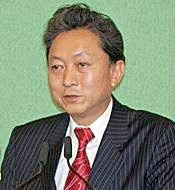
(This is the country paper the author delivered during the symposium titled “Recovery from the Financial and Economic Crisis and Japan-Asean Partnership” held on October 29 at the Keidanren Kaikan in Tokyo, Japan. Organized by the Keizai Koho Center, the symposium had an audience of close to a hundredbusiness executives from Japan’s biggest companies. This paper elicited attention of Japan media.)
THE electoral victory of the Democratic Party of Japan (DPJ) nearly two months ago has generated uncertainty about the future path of cooperation between the world’s second largest economy and the Philippines, among other member-states of the Association of Southeast Asian Nations (Asean).
In a New York Times article published a few days before the left-of-center DPJ was swept into power, Party President Yukio Hatoyama, who subsequently assumed the post of prime minister, indicated that the new ruling party would make a clean break from its right-wing predecessor, the Liberal Democratic Party (LDP), which has ruled Japan for nearly half a century.
Hatoyama said there was a need to rein in American-style globalism. He squarely laid the blame for Japan’s economic malaise on the successive LDP governments starting with the term of Junichiro Koizumi in 2001.
In its election manifesto, the winning DPJ signaled a shift toward domestic concerns, including vast welfare spending that is likely to put pressure on Japan’s fiscal position.
Furthermore, the DPJ indicated its resolve to break Japan’s Iron Triangle, or the decades-old cozy relationship among LDP, bureaucrats and big businesses that turned your country into the world’s second largest economy, and a key source of foreign direct investment (FDI) in developing countries like the Philippines.
We in the Philippines had known of only one Japanese political party—the LDP whose leadership forged Japan’s policy on Asean and on individual member-states of the regional group. This policy is anchored on close ties with the US, which in turn served as a key export market for Japan and other emerging Asian economies that flanked Tokyo in line with its flying geese strategy.
Fate of Samurai bond guarantee
For the Philippines, the DPJ’s victory had an immediate significance, namely the fate of Manila’s quest for Tokyo’s support to a planned Samurai bond offering.
Shortly before it lost power to the DPJ, the LDP-led government had given its consent to the Philippine request for a Japan Bank for International Cooperation (JBIC) guarantee—a plea made by President Gloria Arroyo during her last state visit to Japan.
JBIC has yet to issue the promised guarantee, as it is still in discussions with Manila over the fee the lender would charge for the assistance.
A third global bond offering had eased the pressure on the Arroyo administration to cough up more money to plug a wider-than-expected budget deficit this year.
The government has suspended its budget deficit-reduction program to accommodate higher public spending meant to cushion the Philippines from the impact of the global economic crisis.
But Manila is still banking on the Samurai bond issuance if not to bridge this year’s fiscal gap, then to pre-fund next year’s financing requirements, especially since tax revenues are not expected to fully recover from the economic slowdown just yet.
Japan as top source of FDI
But beyond the issue of the guarantee fee, the Philippines—and other Asean countries for that matter—had enjoyed Japanese financial support for several decades under successive LDP leaderships.
In our case, the Japanese—particularly you, the members of the Keidanren—had been the Philippines’ top source of FDI. This is evident from the vast assembly operations established by Japanese automotive and electronics companies in the many export-processing zones throughout the Philippines.
Like other foreign investors, Japanese businesses had been drawn to the Philippines partly because of the country’s strong macroeconomic fundamentals.
Before the global financial crisis struck, the Philippine economy had grown at a three-decade high of 7.1 percent in 2007. It was the second fastest-growing economy next to Singapore among the Asean-5.
Domestic inflation had eased to a two-decade low of 2.8 percent, while the benchmark 91-day Treasury bill slid to 3.4 percent, its lowest on record.
The low interest-rate regime had allowed bank loans to maintain double-digit growth rates even as lenders trimmed their non-performing loan (NPL) ratio to pre-Asian financial crisis levels.
The Philippines’ strong macroeconomic fundamentals underpinned the corporate sector’s double-digit profit growth.
Capital flight, credit tightness
After the US sub-prime market blew, the Philippines immediately felt the impact as both FDI and foreign portfolio investment inflows vanished. The collapse of Lehman Brothers in September last year accelerated the flight of foreign capital from the Philippines, exposing the country’s foreign dependence amid insufficient domestic savings to fuel economic expansion.
While domestic lenders’ exposure to toxic sub-prime assets was nil, the global credit crunch nonetheless heightened caution in the banking community, which has vivid memories of the Asian financial crisis and the damage it inflicted on their balance sheets.
Although nominal lending rates remained low—thanks to the Philippine central bank’s monetary easing from the end of last year to middle of this year—banks tightened their credit standards nonetheless.
We have begun to witness the impact of this tightening, as loan growth slowed to the single-digit rates in recent months.
In the real economy, the first to take a hit were exports, which contracted by double-digits through September. This contraction was mirrored in the drop in manufacturing output, as well as in the slowdown in job creation in that sector.
Those of you who maintain assembly operations in the many economic zones in and around the Philippine capital know only too well this sad state of affairs.
Domestic economy spares RP from recession
So far, the Philippines has escaped a contraction even as its export markets in the developed world—as well as many neighboring countries—suffered a recession.
What has spared the Philippines from the worst global crisis since the Great Depression of the 1930s is our huge domestic economy.
Unlike our neighbors in Asia whose growth was driven by huge export machines, personal consumption expenditures (PCE) remain the main engine of Philippine economic expansion, fuelled by billions of dollars in remittances from overseas Filipino workers (OFWs).
Even so, personal consumption expenditures took a hit from the current global turmoil—a puzzle for many economists as remittances continued to grow, albeit down to single-digit rates. The likely explanation is that the economic slowdown in many countries hosting OFWs shook the confidence of their beneficiaries, thus causing them to trim if not postpone expenditures.
To a certain extent, what we’re seeing is a repeat of the Asian financial crisis, when OFW money largely kept the Philippine economy afloat. To recall, we contracted the least among the Asean-5 back then.
Typhoons dampen near-term prospects
Over the past month or so, there has been talk of an Asia-led global economic recovery, as the region—including the Philippines—appears to have been the first to emerge from the worldwide rout.
But a series of typhoons placed a damper on the Philippines’ near-term economic prospects. As I speak, the government has yet to tally the final cost of the typhoons in terms of damage to infrastructure and to farm output, which comprises a fifth of Philippine gross domestic product (GDP).
The first of two typhoons also submerged half of Metro Manila in floods, thus likely to erode consumer confidence in the National Capital Region, which accounts for a third of the country’s GDP.
Consequently, the government is pushing for a supplemental budget and has asked the international donor community—including Japan—for additional official development assistance (ODA), or at least permission to realign already committed funds to the relief and rehabilitation effort.
The Arroyo administration also created a Reconstruction Commission, which is tasked to, among others, solicit funds from the private sector and the donor community.
To date, the World Bank has agreed to realign existing loan commitments. A similar commitment from Japan, which remains the Philippines’ biggest source of ODA, would be a big boost to our post-typhoon rehabilitation efforts.
Despite your country’s huge share of ODA to the Philippines, Japanese aid, however, has gone down through the years, with countries like China picking up the slack.
Questions about Japan’s commitments
The DPJ’s assumption to power has raised questions about Japan’s commitment to the direction taken by previous LDP-led governments vis-à-vis its traditional partners like the Philippines.
If the Hatoyama government fulfils its welfare promises to the Japanese people, then would this fiscal spending crowd out ODA for countries like the Philippines?
Would the new government in Tokyo finance its pro-people public spending through heavy taxation of the business sector? If so, how would this affect Japanese corporate investments abroad?
Having said the above, we cannot deny the overwhelming victory of the DPJ during the Lower House elections, as well as the Hatoyama government’s very high approval rating among the Japanese people a month after the polls. These provide hope that the new administration can muster enough public support for its touted break from tradition.
It is with such trepidation—and hope—therefore that the historic change in Japan’s national leadership is viewed in the Philippines and elsewhere.
By Arnold S. Tenorio, Business Editor Manila Times

We can say that Nahdlatul Ulama and Muhammadiyah are mainstream or mainline because their members constitute a large majority of Muslims in Indonesia. By this numerical figure one would be optimistic of the prospect of the moderate character of this
nation. However this character is not permanent. It should not be mistaken that such a stance did not occur until few years after the declaration of independence when nationalist leaders convinced Muslim leaders to give up the demand for an Islamic state to save the common agenda of establishing an independent state. Earlier Muslim leaders including those from the two major organizations shared the demand for a special position of Islam, as a majority religion, in the constitution.
It is unfortunate that the generosity of the mainstream to maintain this moderate character does not run parallel with their economic situation. Only by the fact that Muslims constitute 85 percent of total population would those unfamiliar with Indonesian Islam expect Islam to play a prominent role in public life.
But this is not the case. Despite the increasing representation of Islamic activities and symbols in daily life and media, an unprecedented share of economy is not sufficiently distributed to members of the mainstream Islam. The large majority constituent of the two mainstream organizations are economically left behind, especially those of Nahdlatul Ulama background who continue to live underdeveloped in both rural and urban areas.
I do not mean to echo the Islamist argument of a systemic effort of economic marginalization of Muslim. This is a natural effect of the concentration of resource distribution among few elites and major companies; many of them are unfortunately Muslim by faith. The majority naturally are prone to fall victim to this problem of economic distribution.
Compared to Malaysia, this is a contrast. With the total Muslim population accounting for no more than 60 percent, Islam is the only official religion and more importantly Malay Muslims control significant, if not dominant, portions of economic and political resources.
The underdevelopment of mainstream Muslims is a result of long-term marginalization of Islam during the Soeharto era whose fear of Islamic revivalism forced him to allow the control of resources by capital owners many of whom were coincidentally non-Muslims.
It was not until 1990s when Soeharto started to realize the important of Muslim political support he started to distribute resources to Muslims. But in the short period toward the end of his power, Soeharto's Muslim-friendly policy was not enough to reverse the unequal distribution of resources. Now Indonesia has become a market of ideas. Everybody has an equal right to propagate their ideas including those promoting a larger role of Islam in public and even a change of constitution.
At this point the demand of many Muslim groups is symbolical in the form of advocacy for the implementation of sharia. However, if the situation is unchanged, it can strengthen the aspiration for a broader representation of Islam in public life through sharia application advocated by those outside the mainstream circle.
So far this sharia advocacy has been mainly seen as a threat to state ideology and national integrity. But the unchanged situation of the economic fate of the mainstream Muslims may advise them that a radical policy is needed to change the course.
It is at this point that some of those in the mainstream circle would see a common ground with sharia advocacy propagated by the marginal Islamist groups. In the eyes of the underdeveloped, the sharia advocacy can appear as no longer a threat to state ideology or national integrity, but as an option to improve a larger accommodation of Islam that will strengthen their economic situation.
In this situation a changing of Muslim landscape should be anticipated. The direction seems to move toward the strengthening of a more politicized understanding of Islam; that is being a Muslim that demands a larger role of Islam in public life.
Recently I encountered local leaders of Nahdatul Ulama who were complaining of a weakening commitment of constituent (jama'ah) to the organization (jam'iyah). This is shown by the declining charity for the organization's activities. An NU leader gave an illustrative comparison: "In the past people came to NU office to give charity; now people come to the NU office only when they can expect to receive charity." It is logical that when the mainstream organizations lost social roles, especially in empowering the economy of their constituents, they will lose authority.
Unless there is a dramatic policy that will strengthen the economic fate of the mainstream as well as empowering the social roles of the mainstream Muslim organizations, it is likely that politically minded Muslims will grow toward a majority position that encompasses those affiliated with the mainline organizations. By membership or affiliation, the mainline groups may still hold the majority, but by political view those with aspiration for a broader political role of Islam can take over the current hold of the moderates.
By Mohammad Iqbal Ahnaf, Wellington, New Zealand The writer works at the Centre for Religious and Cross-cultural Studies (CRCS), Universitas Gadjah Mada, and is a PhD student at the School of Government, Victoria University of Wellington, New
Zealand.

All eyes on the rising factory to the world
THE emergence of China, and especially its economic power, is being closely watched not only by developed nations but also the world's second-largest economy -- Japan.
Beijing is seen as the locomotive for the world economy in the face of the dismal performance of developed economies, including the United States and Europe.
Rapid economic growth and an increasingly sophisticated and growing consumer market have raised the region's dependence on China for trade and investment.
China, described as "the factory to the world", has seen its trade with countries in the East and Southeast Asia increase.
China is emerging as a major trading partner for a number of countries in the region, replacing the US and Japan, which were important markets and sources of foreign investment for many countries in Southeast Asia.
China showed that it is a responsible economic power, and won the appreciation and trust of Asian nations during the financial crisis in 1997-1998, by not depreciating its currency, which would have worsened the situation for the affected nations, including Malaysia.
The latest figures from Seoul show that South Korea's exports to China rose while those to Japan and the US declined. China is now South Korea's biggest trading partner.
Beijing is also a major export market for many countries in the region and a source of foreign direct investment for a number of countries in Asia, Africa and Latin America.
As a result, Japan, the only member of the Group of Eight (G8) industrialised nations, sees its economic clout in the region declining.
The situation has not escaped the attention of the new leadership in Tokyo. Concerted efforts are being made to remain ahead in technological advancement and to retain its influence in the region.
Japanese Prime Minister Yukio Hatoyama proposed setting up an East Asian Community, comprising the 10 Asean members together with China, South Korea, Japan, Australia, India and New Zealand (Asean+6).
This proposal is seen by some as a means to limit China's growing power and influence in the region.
The earlier proposal for Asean+3 is viewed by some as establishing China as the dominant power in the group. A larger grouping of Asean+6 would dilute Beijing's influence.
Indeed, Dr Go Ito of Meiji University in Tokyo told Asean journalists that Asean+3 was a Chinese strategy for Beijing to have greater leverage in the region. That was why, he said, Japan had proposed the Asean+6: to reduce China's leverage.
Other Japanese leaders, including corporate figures, said it was important for Japan to engage an emerging China, and that the two neighbouring nations could form a partnership.
Australia, which is also pushing for an Asean+6 community, would like to see US participation in some form.
Japan, which tabled the Asean+6 proposal at the recent Asean summit in Hua Hin, Thailand, has not explicitly said it would like to see the US included in the group.
Japan's senior vice-minister of trade, economy and industry, Teruhiko Mashiko, said in Tokyo last week that Japan placed importance on East Asia, would like to see the emergence of the East Asian Community, and views it as important in every aspect of its relations with the region.
Mashiko added that Japan valued its relationship with the US, which was still important despite it pursuing the Asean+6 initiative.
East Asia is in better economic health than the developed West, and is now more vocal and confident.
Indian Prime Minister Manmohan Singh summed it up: "The world's eyes are on Asia as the region that can lead the global economic revival."
But there is an urgent need for the region to get its act together. The region's traditional markets in the West are not expected to provide growth momentum for its goods and services. The old model cannot be relied upon.
As Thai Prime Minister Abhisit Vejjajiva said: "The old growth model where ...we have to rely on consumption in the West for goods and services produced here, we feel will no longer serve us as we move to the future."
The region will have to rely on itself. With growing intra-regional trade and interdependence, will countries in the region set aside their suspicions of each other and be prepared to cooperate, irrespective of which member is perceived as the dominant partner?
Asean+3 has some traction, and it has been in the works for more than a decade. (The original proposal was made by former prime minister Tun Dr Mahathir Mohamad in the early 1990s. It was criticised by the US, which urged South Korea and Japan not to support it.)
The continuing debate on membership, and on whether the US should be included as a member, is viewed by some as a move to dilute Asia's growing power.
Is there need for the US to be included in the East Asian grouping or community?
Geographically, the US is not part of East Asia. There are also other groupings, such as the Asia-Pacific Economic Cooperation (Apec), in which the US is a member along with Australia and other East Asian economies. By HARDEV KAUR

BANGKOK – Thailand's fugitive former prime minister Thaksin Shinawatra has spent much of the past three years roaming the globe, shopping for diamonds in Africa, golfing at Asian resorts, and humiliating the government from a distance.
After stirring up sometimes violent passions from afar among his supporters and opponents inside Thailand, the deposed leader has now entangled his homeland in a diplomatic imbroglio with neighboring Cambodia, which this past week named him a special adviser on economic matters.
The idea of Thaksin being made welcome by Cambodia's mercurial Prime Minister Hun Sen has jangled nerves in the Thai capital. Thailand already has a nasty dispute with its neighbor over border territory, which has led to several small but deadly clashes over the past year and a half. Now Thaksin, who was ousted in a 2006 coup after being accused of corruption and insulting the country's constitutional monarch, may have found his launch-pad for a political comeback.
Thaksin is on a new offensive. This is a calculated campaign to undermine this government and to change governments. He wants to retake what he sees as his legitimate right, which is to have another election that he believes he will win.
For the government of Prime Minister Abhisit Vejjajiva, Cambodia's action is a slap in the face it feels compelled to respond to, calling it "interference in Thailands domestic affairs."
Thaksin is thought to currently be in Dubai.
He has not indicated if he plans to live in Cambodia or spelled out how he will perform his new dual role as personal adviser to Hun Sen and an economic adviser to his government.
Thaksin, a tycoon turned politician, was elected by landslide wins to serve two terms as prime minister from 2001 to 2006. He retains huge popularity among his rural poor power base who have staged frequent rallies calling for his pardon and return to power. But he is reviled by the educated urban elite, who led months of street protests that led to the coup and again when his allies briefly took power.
Efforts to cut him down to size have failed. Courts have sentenced him to two years in prison for corruption while in office and dissolved his political party, while his Thai assets worth $2.25 billion have been frozen and his Thai personal and diplomatic passports canceled.
Britain, Germany and other countries have barred Thaksin, but there were no shortage of others willing to accept his investment offers and hand over new passports, including Nicaragua and Montenegro. Thaksin posts photos of his travels on Facebook. Recent snapshots show him golfing in Brunei and Dubai, inspecting diamond mines in South Africa, sipping coffee in a private jet and meeting prime ministers or presidents on trips to Sri Lanka, Papua New Guinea and the Maldives.
Thaksin's new relationship with Hun Sen is bound to revive speculation of private business deals between the two while he was prime minister. No such ethical doubts dog current Prime Minister Abhisit, but he face the bigger headache of how to calm the political maelstrom around Thaksin.
Thailand is now in the international spotlight and its leader has been discredited. The strategy Thaksin is using, is destroying everything in his path to reach his goal. By JOCELYN GECKER

Historic realignment of political blocs starts to appear a real possibility
On Nov. 23, after months of delays, a High Court in Kuala Lumpur is expected to hear yet another appeal from Malaysian opposition leader Anwar Ibrahim against trial on charges that he had sex with a 24-year-old male aide, Mohd Saiful Bukhari Azlan. Partly because of Anwar's troubles, not the least of them the charges, which have been hanging over his head since June of 2008, and for several other reasons, it is beginning to appear as if Malaysia is undergoing a historic political realignment.
Political observers in Kuala Lumpur say the sodomy charges, viewed by many as manufactured to destroy Anwar's political career, are leaving Anwar's own Parti Keadilan Rakyat distracted and rudderless. The heady days of March 2008, when the three-party coalition wrested five states from the Barisan Nasional and broke its 50-year hold on a two-thirds majority in Parliament, are in the past.
The opposition coalition is being harried on all sides by the Barisan and suffering from internal conflicts that have weakened it considerably. In addition, possibly because he is distracted by the trial, the sources say, Anwar, a charismatic speaker, has not been a particularly effective leader. As a result, the leadership of the opposition is passing from Anwar's Parti Keadilan to Parti Islam se-Malaysia, the fundamentalist Islamic party with its roots in the rural, poor northeast of the country. It is PAS, as the party is known, that has the political infrastructure, manpower and stamina for the long haul.
Many Keadilan members, one analyst says, came from the dominant United Malays National Organisation, the biggest ethnic party in the ruling national coalition, and they are susceptible to returning to it if they don't see the opportunity for Keadilan to take over to rule the country. And that hope appears to have gone glimmering after Anwar had promised to take over more than a year ago and failed.
In the meantime PAS has moved shrewdly to consolidate its growing power in urban areas, particularly the Selangor area surrounding the capital of Kuala Lumpur. Many ethnic Malays, turned off by the continuing money politics and corruption in Umno, are turning to the fundamentalist party, and a surprising number of other ethnic minorities as well.
But while PAS is seeking to project a more moderate image in the urban areas, the party is quite proud of the conservative changes it has made in the nearly two decades since it took over Kelantan state in 1990. Gambling outlets and pawnshops have been closed, unisex barbershops are closely monitored and Muslim women are required to wear headscarves.
So-called khalwat (close proximity) police roam the streets seeking to make sure boys and girls don't do what comes naturally to most boys and girls. Those restrictions are starting to be felt in Selangor as well. Religious police have raided nightclubs where ethnic Malay men and women have been found to be drinking, there have been attempts to stop beer sales in ethnic Malay areas and imams and bilals (muezzins) have been given the power to police dress and behavior.
Despite earlier flirtation by PAS president Hadi Awang and his supporters to consider joining Umno in an ethnic Malay-dominant PAS will choose to remain in the Pakatan Rakyat coalition, given that it gives the Islamic party the best chance to take power at a federal level despite the earlier flirtation by PAS president Hadi Awang and his supporters to possibly join Umno in an ethnic Malay-dominant coalition. With no business interests, in contrast to UMNO, PAS isn't interested in prolonging the country's New Economic Policy, an affirmative action program for the country's dominant ethnic Malays, who make up 60 percent of the population,according to an analyst for a Kuala Lumpur think tank Pas doesn't mind conceding to the Chinese community the entrenchment and growth of Chinese schools, since this doesn't conflict with PAS' goal of imposing shariah (Islamic religious) law. PAS has continually said shariah law won't apply to non-Muslims, pointing to their governance in Kelantan. But what a lot of Chinese forget is that because PAS
doesn't have power at the federal level, it cannot impose shariah law. Who knows what PAS will do if it gets the opportunity to impose shariah law throughout the country.
Will they exempt non-Muslims from Shariah law?
Neither PAS nor the Democratic Action Party, the ethnic Chinese leg of the opposition coalition, intends to let the coalition fail. The DAP, a cadre-based party with considerably more discipline than Parti Keadilan, has continued to gain membership at the expense of the Malaysian Chinese Association, the second biggest ethnic party in the Barisan, which is mired in one of the biggest scandals in the country's history over a plan to build a multimodal port system in Port Klang west of Kuala Lumpur. Party infighting has rendered the party nearly moribund.
There is a growing feeling that because of the wreckage of the minority parties, there is little hope that minority voters will return to the Barisan, and that it would be wiser to concentrate on trying to pull in the Malay vote by itself. If that happens – and Najib is said to be ambivalent at this point, continuing to push his 1Malaysia ethnic harmony mantra – it would be a breakdown of the historic tripartite ethnic compact that has ruled the country from its inception. Asia Sentinel

Long after the misadventures of the United States in Indochina, landlocked Laos evokes golden temples, golden smiles and, in the business world, golden mining prospects. But it is a different type of gold that will occupy the nation when the region's Southeast Asian (SEA) Games are for the first time staged in the country, from 9-18 December. What's in it for little Laos?
The SEA Games may not register much outside the region, but this year, celebrating their golden jubilee, they are a big deal for the 11 countries involved. These are Brunei, Cambodia, East Timor, Indonesia, Laos, Malaysia, Myanmar, the Philippines, Singapore, Thailand and Vietnam. The previous games, in Thailand in 2007, featured more that 5,000 athletes and almost 2,000 officials across 43 different sports.
Laos, a tiny country of just six million people, is understandably excited at hosting the 25th games for the first time in the event's 50-year history. Local news reports in the state-controlled media refer proudly to the "honor" of playing host, while organizers boast the event will "put Laos on the map", attract tourists and draw foreign investment.
Just as important, the ruling Lao People's Revolutionary Party (LPRP) sees the games as a boost to the regime's prestige at home. This is not just a sports event, but probably the biggest state extravaganza in the country's history since the Lao People's Democratic Republic gained independence from France in July 1949. Underlining the party-state's involvement, the president of the organizing committee is Deputy Prime Minister Somsavat Lengsavad.
Despite the difference in scale, there are parallels to the Summer Olympic Games held in China last year. Just as Beijing leveraged the event to proclaim China's emergence as a global power, the games in Vientiane represent a regional coming-out for the Lao one-party state, a symbolic culmination of the over three decade-long "revolutionary struggle" for independence and development under the LPRP. Undertaking the complex task of the hosting a major international event, in that thinking, demonstrates the country's modern credentials.
Perennially the "smaller brother" to its regional rivals, hosting the event constitutes nothing less than a symbolic coming of age for Laos. A government spokesman told the Bangkok Post, "The SEA Games in Laos is a magnificent example of what sports can do ... and Laos has joined the giants in this respect."
Here the issue is less about showcasing the nation to attract tourism and investment, than demonstrating the munificence of the ruling party-state. More unexpected, perhaps, is the widespread transnational support for the games among the Lao diaspora, formed from the mass exodus of refugees after the party's 1975 rise to power when it overthrew the royalist government, forcing King Savang Vatthana to abdicate on December 2, 1975.
Fans discuss the games in a Facebook group and websites, some set up even before the official games site. Many contributors plan to travel to Laos for the event, one enthusing, "I have built my whole year around this." Identified online by the flag of the pre-1975 royal regime, such posts suggest the Lao national pride of hosting the event may be linking Lao communities usually separated by distance and politics.
Yet, many questions also surround the event. Due to a lack of infrastructure, the Lao version of the games will consist of only 25 sports, little more than half the number held in Thailand. The omission of standard sports such as basketball, gymnastics and track cycling has outraged some competing nations, particularly Malaysia and the Philippines, while the addition of novelties such as finswimming - a speed competition in which swimmers don a large, dolphin-like fin - has aroused chuckles of dismay.
It matters little that these countries are aggrieved at the loss of medal opportunities, nor that all SEA Games' hosts nominate their own, often quirky events. Press coverage has focused not on Laos' unprecedented national achievement, but on the games' loss of "glamour" and reduced "priority" for these countries. The poverty and lack ofdevelopment of Laos - one of the region's poorest nations - has attracted particular attention, the exact opposite of what the Lao government is trying to promote.
Most symbolically, perhaps, Laos is able to host the games only through massive assistance from its larger, richer allies in the region. The Chinese Development Bank has provided financing for the US$100 million main stadium complex, which is being built by Chinese contractors on the outskirts of the capital, Vientiane.
A Vietnamese company has built the $19 million athletes' village and Thai funds have been used to refurbish the existing National Stadium. Dozens of smaller financial agreements with countries like Japan and South Korea will provide everything from training to tracksuits.
Strategic Patronage
There are good reasons for these countries to contribute their patronage. First is the simple commercial benefit. In return for building the stadium, Chinese developers were reportedly granted 1,640 hectares of prime land near the That Luang stupa, the national symbol, on which to develop a "Chinatown" complex in Vientiane. The Vietnamese company that funded the athletes' village is opening a wood-processing factory and hotel in Laos.
Second is regional influence. Thailand, Vietnam and China have long competed for influence in Laos. While socialist Vietnam has held political sway since the 1975 revolution, China has aggressively expanded its economic presence and soft power in the region, and some in the government, notably the Chinese-educated Somsavat, have increasingly turned to the regional giant. Thailand, meanwhile, considers Laos a natural part of its sphere for cultural and historical reasons, a perception boosted by the flow of goods, people and information across the Mekong River that separates the two countries.
Third is regional friendship and cooperation. For half a century, the SEA Games and their predecessor, the Southeast Asian Peninsula Games, have been the region's major cultural expression of regionalism, providing opportunity for friendly cooperation and rivalry without the risk of political fallout.
But despite all the pluses, the huge foreign assistance required to host the event has raised stubborn questions about Laos' national autonomy. For every article invoking the "spirit of ASEAN", others scoff at Laos' inability to fund and organize their own event. (The 11 participants at the SEA Games comprise the 10 members of the Association of Southeast Asian Nations, plus East Timor.)
The New York Times recently summed up the feeling in the headline "Laos stumbles on Path to Sporting Glory". Reinforced in the region's own press, such views emphasize Laos' dependence on foreign aid, undermining the games' perceived benefits at home and abroad.
This ambivalence is also evident in the country. Opposition to the Chinatown deal, which saw the original development plan significantly scaled back, was framed in xenophobic nationalist terms, with residents questioning how the government could give up land to foreigners in the heart of the capital. With the deal pared back, questions linger as to how the Chinese will be compensated, raising the specter of massive government debt at a time the financial downturn has already applied added pressure on the games.
Meanwhile, web-board contributors ask how the new facilities can be "Lao" when they are adorned with banners in Chinese or Korean. Others wonder why developers have imported their own workers from China, rather than employing local Lao labor. Others still ponder why Laos cannot even produce its own merchandise for the games. Such criticisms point to the central paradox of the SEA Games: how can they be a national achievement when the nation is so dependent on others to host them? Ultimately, factors which seem to mitigate the positive impact of the games need to be viewed in historical perspective.
The Lao nation and nationalism have always emerged from the intersection of national, regional and international ideologies and interests. In pre-colonial times, minor Lao kingdoms paid tribute to one or more overlords, allowing them to retain a substantial degree of autonomy in the process. Likewise, the peculiarity of French colonialism was that, rather than destroying Lao identities, it actually created the modern idea of Laos as a political and cultural entity.
The post-colonial Royal Lao Government was the heir of this national identity, which further solidified despite, or perhaps because of, Cold War rivalries, the Vietnam War and a budget largely underwritten by US assistance. After the US withdrawal and the communist revolution of 1975, the new regime looked to the socialist bloc, especially Vietnam and the Soviet Union, to plug the financial gap.
The enduring theme in this history has been the inability of Laos to pay its own way; its engagement with and dependence on foreign powers. The country's current strategy of market-based development underwritten by foreign investment, foreign aid and ASEAN integration continues the trend.
Far from being undermined, the party-state represents itself as the all-powerful and benevolent conductor of these forces. This explains why state-run newspapers are filled constantly with photographs of "handover ceremonies", and never more so than in the lead-up to the games. In this worldview, hosting the games demonstrates not the government's lack of independence, but its consummate skill in harnessing aid from the region.
The general population might not be completely convinced, but this does not matter in the wider view. The 2009 SEA Games' limited size and dependence on foreign help merely accords with the self-image of Laos as a small country with limited resources. Last year, for instance, the country sent a tiny team of four athletes to the Beijing Olympics, thanks to funding from the International Olympic Committee. While there was certainly some criticism on the Internet, more comments focused on the positive. "Four is better than nothing," said one, while another suggested plaintively, "When we are poor, we have to accept that we are poor."
This may not be how the government sees its hosting of a scaled-back games, but, together with positioning itself as a benevolent conductor of foreign assistance, such views help to explain how the event is being seen as a success inside the country when those outside see mainly dependence and poverty. Laos' little SEA Games are a big deal for the poor country, foreign-funded or not. By Simon Creak PhD candidate at the College of Asia-Pacific, Australian National University, with a specialization in the history of Laos.


